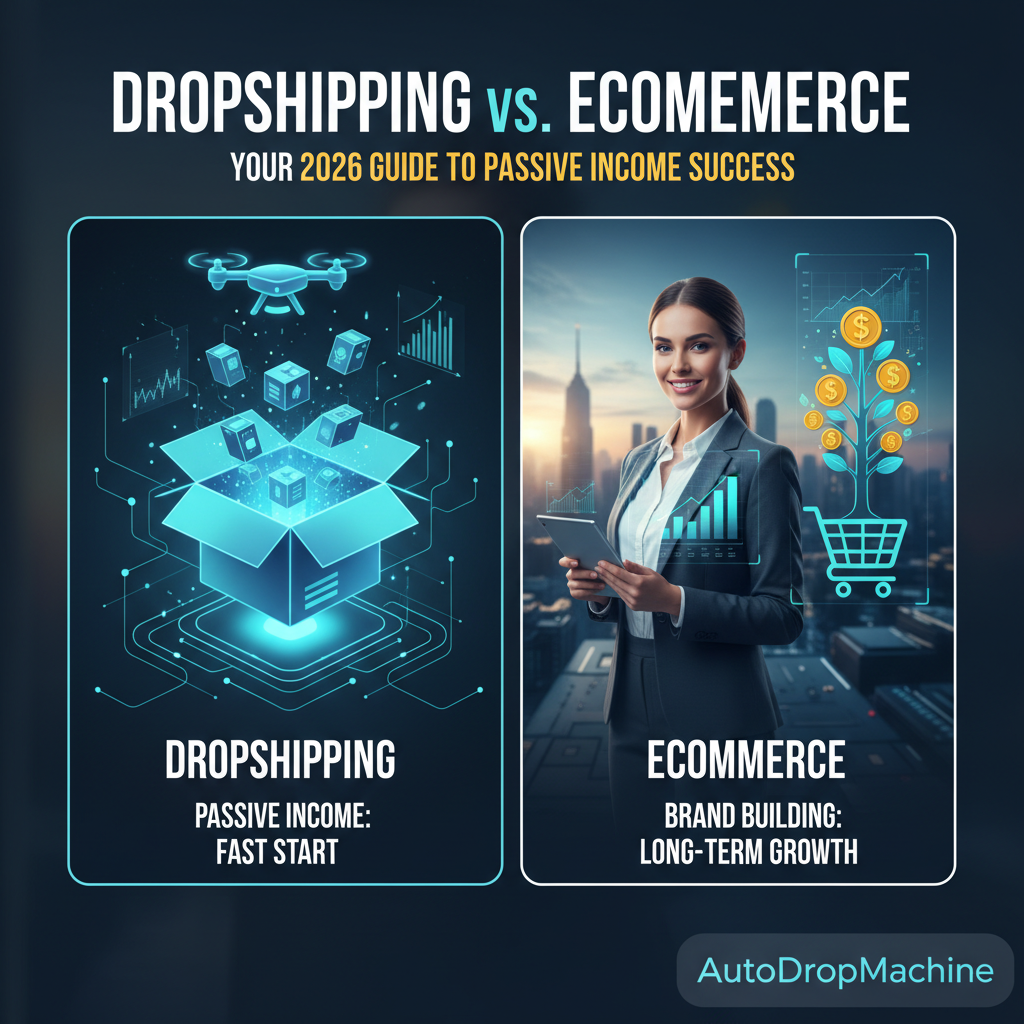
Dropshipping vs. Ecommerce: Your 2026 Guide to Passive Income Success
Dropshipping vs. Ecommerce: Your 2026 Guide to Passive Income Success
The Digital Landscape in 2026: Opportunities Abound
Welcome to 2026, where the internet is even more deeply ingrained in our lives than ever before. The opportunity to create passive income online is immense, and you're perfectly positioned to seize it. But with so many options, choosing the right business model is crucial. Today, we’ll dissect two powerhouses: dropshipping and traditional ecommerce. Which path will lead you to your financial freedom?
Understanding Dropshipping: The Lean Startup
Dropshipping has evolved, but the core principle remains the same: you sell products without holding any inventory. When a customer places an order on your website, you forward it to a third-party supplier who ships the product directly to the customer. Think of it as being the ultimate middleman – but with a modern, automated twist.
The Allure of Dropshipping:
- Low Startup Costs: This is the biggest draw. You don't need to invest heavily in inventory, making it accessible to almost anyone.
- Wide Product Selection: You can offer a vast array of products without the headache of storage.
- Location Independence: Run your business from anywhere with an internet connection. Imagine managing your store from a beach in Bali!
- Scalability: Easily scale your business by adding more products and suppliers.
The Challenges of Dropshipping:
- Lower Profit Margins: You'll likely have smaller profit margins compared to traditional ecommerce due to supplier costs.
- Inventory Management Issues: Relying on suppliers for inventory can lead to stockouts and delays. Automation and real-time inventory updates are critical in 2026.
- Shipping Complexities: Dealing with multiple suppliers can complicate shipping and order tracking.
- Branding Challenges: It can be difficult to establish a strong brand identity when you don't control the entire customer experience.
Dropshipping in 2026: What's Changed?
The dropshipping landscape has matured significantly. Automation tools are now more sophisticated, AI-powered product research is commonplace, and integration with global logistics networks is seamless. Success hinges on finding reliable suppliers, building a strong brand around a niche, and providing exceptional customer service. Don't fall for outdated strategies; embrace the new era of dropshipping powered by technology.
Understanding Traditional Ecommerce: Building Your Empire
Traditional ecommerce involves purchasing and storing inventory, managing your own fulfillment, and building a brand from the ground up. While it requires more upfront investment and effort, it offers greater control and potential for higher profits.
The Advantages of Traditional Ecommerce:
- Higher Profit Margins: You have more control over pricing and can achieve higher profit margins.
- Brand Control: You have complete control over your branding, packaging, and customer experience.
- Inventory Control: You manage your own inventory, ensuring product availability and quality.
- Direct Customer Relationships: You can build stronger relationships with your customers through personalized service and marketing.
The Disadvantages of Traditional Ecommerce:
- Higher Startup Costs: Requires significant investment in inventory, storage, and fulfillment infrastructure.
- Inventory Management: Managing inventory can be time-consuming and complex, especially as your business grows.
- Shipping and Fulfillment: You're responsible for shipping and fulfillment, which can be logistically challenging.
- Greater Risk: You're responsible for unsold inventory, which can lead to financial losses.
Ecommerce in 2026: What's Changed?
Ecommerce in 2026 is all about personalization, seamless experiences, and data-driven decisions. Customers expect tailored product recommendations, fast and reliable shipping, and exceptional customer support. AI plays a crucial role in optimizing pricing, predicting demand, and automating customer service. To thrive, you need a robust ecommerce platform, a strong marketing strategy, and a relentless focus on customer satisfaction.
Dropshipping vs. Ecommerce: A Head-to-Head Comparison
Let's break down the key differences to help you decide which model is right for you:
| Feature |
Dropshipping |
Ecommerce |
| Startup Costs |
Low |
High |
| Inventory Management |
Minimal |
Significant |
| Profit Margins |
Lower |
Higher |
| Brand Control |
Limited |
Extensive |
| Risk |
Lower |
Higher |
| Scalability |
Easier |
More Complex |
Which Path is Right for You? Finding Your Fit in 2026
The best choice depends on your individual circumstances, goals, and risk tolerance. Ask yourself these questions:
- What's your budget? If you're starting with limited capital, dropshipping might be the better option.
- How much time can you dedicate? Ecommerce requires more hands-on management.
- What are your long-term goals? Do you want to build a strong brand or generate quick profits?
- What's your risk appetite? Are you comfortable investing in inventory?
Success Stories in 2026:
Dropshipping Success: Meet Sarah, who launched a successful dropshipping store specializing in eco-friendly pet products. By focusing on a niche market, building a strong social media presence, and providing exceptional customer service, she created a thriving passive income stream. She leverages AI-powered tools to identify trending products and automate her marketing campaigns.
Ecommerce Success: Then there’s David, who built a successful ecommerce business selling handmade leather goods. By investing in high-quality materials, crafting unique designs, and providing personalized customer service, he created a loyal customer base and a strong brand reputation. He uses advanced analytics to optimize his website and personalize the shopping experience.
Strategies for Success in 2026: No Matter Your Choice
Regardless of whether you choose dropshipping or ecommerce, these strategies are essential for success in 2026:
- Niche Down: Focus on a specific niche market to reduce competition and attract a targeted audience.
- Build a Strong Brand: Create a unique brand identity that resonates with your target audience.
- Provide Exceptional Customer Service: Go above and beyond to exceed customer expectations.
- Leverage Technology: Embrace automation, AI, and data analytics to optimize your business.
- Master Marketing: Invest in effective marketing strategies to drive traffic and sales.
- Stay Agile: Adapt to changing market conditions and customer preferences.
Your Journey to Passive Income Begins Now
The path to passive income isn't always easy, but it's definitely achievable with the right mindset, strategies, and tools. Whether you choose dropshipping or ecommerce, remember to focus on providing value to your customers, building a strong brand, and continuously learning and adapting. The future of online business is bright, and your success story is waiting to be written. Start today!
Dropshipping vs. Ecommerce FAQ
Frequently Asked Questions: Dropshipping vs. Ecommerce
Q: What are the biggest advantages of dropshipping in 2026?
A: The biggest advantages remain low startup costs and the ability to offer a wide variety of products without managing inventory. Advanced automation tools now make it easier to manage orders and communicate with suppliers.
Q: Is dropshipping still profitable in 2026?
A: Yes, dropshipping can be profitable, but it requires a strategic approach. Focus on niche markets, build a strong brand, and provide exceptional customer service. Competition is fierce, so differentiation is key.
Q: What are the biggest challenges of dropshipping in 2026?
A: The biggest challenges include finding reliable suppliers, managing inventory issues, and building a strong brand identity. Automation and real-time inventory tracking are crucial for success.
Q: What are the benefits of traditional ecommerce in 2026?
A: Traditional ecommerce offers higher profit margins, greater control over branding, and the ability to build stronger customer relationships. You also have more control over product quality and inventory.
Q: What are the drawbacks of traditional ecommerce in 2026?
A: The main drawbacks are higher startup costs, the need to manage inventory, and the responsibility for shipping and fulfillment. It also carries a higher risk due to unsold inventory.
Q: How important is branding in ecommerce in 2026?
A: Branding is more important than ever in 2026. With so many online businesses, a strong brand identity is essential for standing out from the competition and building customer loyalty.
Q: What role does AI play in ecommerce in 2026?
A: AI plays a crucial role in optimizing pricing, predicting demand, automating customer service, and personalizing the shopping experience. Businesses that leverage AI effectively will have a significant competitive advantage.
Q: Which business model is better for passive income?
A: Both dropshipping and ecommerce can generate passive income, but it depends on your level of automation and outsourcing. Dropshipping can be more passive in the beginning due to lower initial involvement with product storage and shipping. Ecommerce can become passive as you systematize processes with staff and 3PL partners.